I’ve been riding long enough to know that most people treat motorcycle gear like an afterthought.
You’re probably here because someone told you that you need proper gear, or maybe you’ve been riding in jeans and a leather jacket wondering if it’s really that big of a deal. It is.
Here’s the truth: why motorbike gear is important comes down to one simple fact. The right equipment is the only thing between you and the pavement when things go wrong.
I’ve spent thousands of hours on the road. City commutes. Cross-country tours. Every type of riding condition you can imagine. I’ve tested gear in real-world situations, not just in a showroom.
This guide breaks down each piece of motorcycle gear and explains what it actually does for you. Not the marketing talk. The real function.
You’ll learn why certain gear is non-negotiable and how each piece protects you in ways you probably haven’t considered. I’ll also address the common excuses (too expensive, too uncomfortable, looks dorky) and show you why they don’t hold up.
No scare tactics. Just straight information about what works and why it matters.
Your gear isn’t just style. It’s your second skin out there.
The Physics of a Fall: Why ‘Dressing for the Slide’ is Non-Negotiable
Here’s what happens when you go down.
You hit something. That’s your primary impact. Your body collides with a car, a guardrail, or the pavement itself.
Then comes the secondary impact. You slide. And this is where most riders get hurt bad.
Your jeans? They last about half a second on asphalt at 30 mph. I’ve seen the aftermath. The denim just shreds away like tissue paper.
Regular clothes can’t handle the friction. But proper gear is built specifically for this. Abrasion-resistant materials like Kevlar or Cordura are designed to stay intact while you’re sliding across pavement.
Impact protection is different. That’s what the armor in your jacket and pants does. It absorbs the force when you hit something and spreads it across a wider area instead of letting it concentrate on one spot (like your shoulder or elbow).
Think about it this way. You wouldn’t step into a boxing ring without gloves. Same logic applies here.
It’s not if you’ll go down. It’s when.
Gear isn’t for the perfect Sunday ride you’re planning. It’s for the driver who doesn’t see you. The oil patch in that turn. The moment everything goes sideways before you even process what’s happening.
And here’s something most people don’t think about. Good gear does more than protect you in a crash. It shields you from wind, rain, and rocks kicked up by other vehicles. Even bugs hitting you at 60 mph can break your focus.
When you’re comfortable and protected, you ride better. You pay attention to the road instead of how cold your hands are.
That’s why motorbike gear is important fmbmotogear exists in the first place.
The Command Center: Why Your Helmet is the Most Critical Investment
You only get one head.
I can’t stress this enough. Every other piece of gear protects something that can heal. Your helmet? It’s protecting the thing that makes you, well, you.
Here’s what most riders don’t realize. Head injuries cause more motorcycle fatalities than anything else. Not road rash. Not broken bones. Head trauma.
That’s why I’m starting with helmets before we talk about jackets or boots at fmbmotogear.
Some riders argue that a basic DOT helmet is good enough. They say spending more is just paying for brand names and fancy graphics. And sure, I get wanting to save money.
But here’s what that thinking misses.
Not all safety ratings are created equal. A DOT certification is the bare minimum. ECE testing is more rigorous. SNELL? That’s the gold standard (they literally destroy helmets to see what they can withstand).
What Those Letters Actually Mean
DOT is self-certified by manufacturers. ECE requires independent lab testing. SNELL goes even further with impact tests that simulate real crashes.
Which one you need depends on how you ride. Commuting around town? ECE works fine. Track days or aggressive street riding? Go SNELL.
Now let’s talk about fit because this is where riders mess up constantly.
A $600 helmet that doesn’t fit right won’t save you. It’ll slide around during impact or come off completely. I’ve seen it happen.
Your helmet should feel snug without causing pressure points. When you shake your head, the helmet moves with you. Not on you.
Here’s the quick test. Put it on and try to roll it forward off your head. If it comes off easily? Too big.
You’ve got three main styles to choose from. Full-face covers everything and gives you the best protection. Your chin and jaw take hits in about 35% of crashes.
Modular helmets flip up for convenience but add weight and potential failure points. Open-face helmets? They leave your face exposed where you’re most likely to get hurt.
I ride with a full-face. Every single time.
Because understanding why motorbike gear is important comes down to this simple fact. You can replace a bike. You can’t replace your brain.
Your Armor: The Role of Jackets and Pants
You’ll hear riders say all gear looks the same these days.
That everything with a logo and some padding will keep you safe.
I’m going to tell you why that’s wrong.
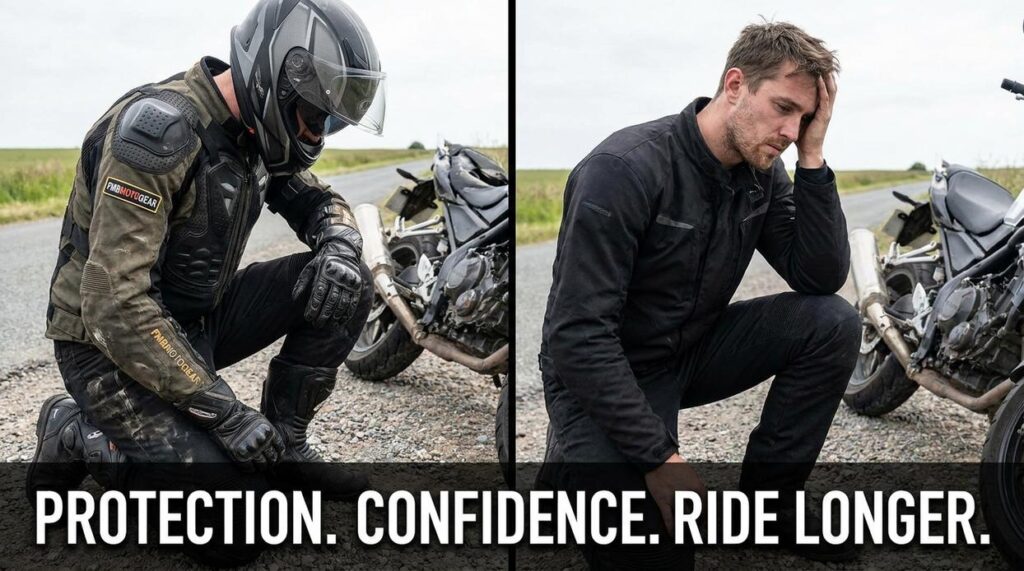
Not all jackets and pants are created equal. And the difference between good gear and bad gear? It’s the difference between walking away from a slide and spending months in recovery.
Let me break down what actually matters.
Leather or textile?
Most riders pick sides like it’s a religion. Leather guys swear nothing else can touch asphalt like cowhide. Textile fans talk about versatility and weather protection.
Here’s my take. Both work, but for different reasons.
Leather has better abrasion resistance in a slide. It’s been tested for decades and we know exactly how it performs. But it’s heavy, hot in summer, and soaks up water like a sponge when it rains.
Modern textiles (we’re talking Cordura and Kevlar weaves) come close to leather in abrasion tests. They breathe better and most come with waterproof membranes built in. The trade-off? They can wear out faster if you’re not careful about maintenance.
I ride in both depending on the trip.
The armor inside matters more than the shell.
This is where most people get it wrong. They buy a jacket that looks tough and assume they’re protected.
Your gear needs CE-rated armor in your elbows, shoulders, and back. Your pants need it in the hips and knees. This armor spreads impact forces across a wider area instead of letting all that energy slam into one joint.
(I’ve seen too many riders skip the back protector because it feels bulky. Don’t be that person.)
Your fashion jacket won’t save you.
I know that vintage leather jacket looks cool. I get why you want to wear your regular jeans.
But here’s the truth nobody wants to hear. That fashion leather? It’s designed to look good, not to survive a 40 mph slide. The leather is too thin. There’s no armor. The stitching will blow apart on impact.
Regular jeans are even worse. Denim shreds in about two feet of sliding on pavement. I’ve seen the road rash photos. You don’t want that.
Purpose-built riding gear uses thicker materials, reinforced stitching, and armor placement based on actual crash data. It’s not about style. It’s about physics.
Weather features keep you alive.
Some riders think thermal liners and ventilation are just comfort features.
They’re wrong.
When you’re freezing or overheating, you lose focus. Your reaction time drops. You start making mistakes. I’ve watched riders blow through turns because they were too busy thinking about how cold their hands were.
Good gear has removable thermal liners for winter rides. Waterproof membranes keep you dry (because wet and cold is dangerous). Ventilation zippers let air flow when it’s hot.
This matters more than people realize. Comfortable riders are safer riders. When you’re not distracted by the weather, you can focus on the road.
Before you figure out how to choose motorcycle boots fmbmotogear, get your jacket and pants sorted first.
Understanding why motorbike gear is important fmbmotogear starts with knowing what actually protects you and what just looks the part.
Your gear is your armor. Pick it like your skin depends on it.
Because it does.
Contact Points: The Critical Function of Gloves and Boots
I’ll never forget the first time I went down.
It happened on a wet morning commute. Nothing dramatic. My front tire just slipped on some oil at a stoplight and down I went at maybe 15 mph.
My hands hit the pavement first. That’s what they do. Your body doesn’t ask permission. It just throws your hands out to catch you.
I was wearing proper gloves that day. The palms were shredded but my hands? Not a scratch. My buddy who dropped his bike in sneakers and regular gloves wasn’t so lucky. He spent three weeks with bandages wrapped around both palms.
That’s when I really understood why motorbike gear is important fmbmotogear.
Your hands take the first hit.
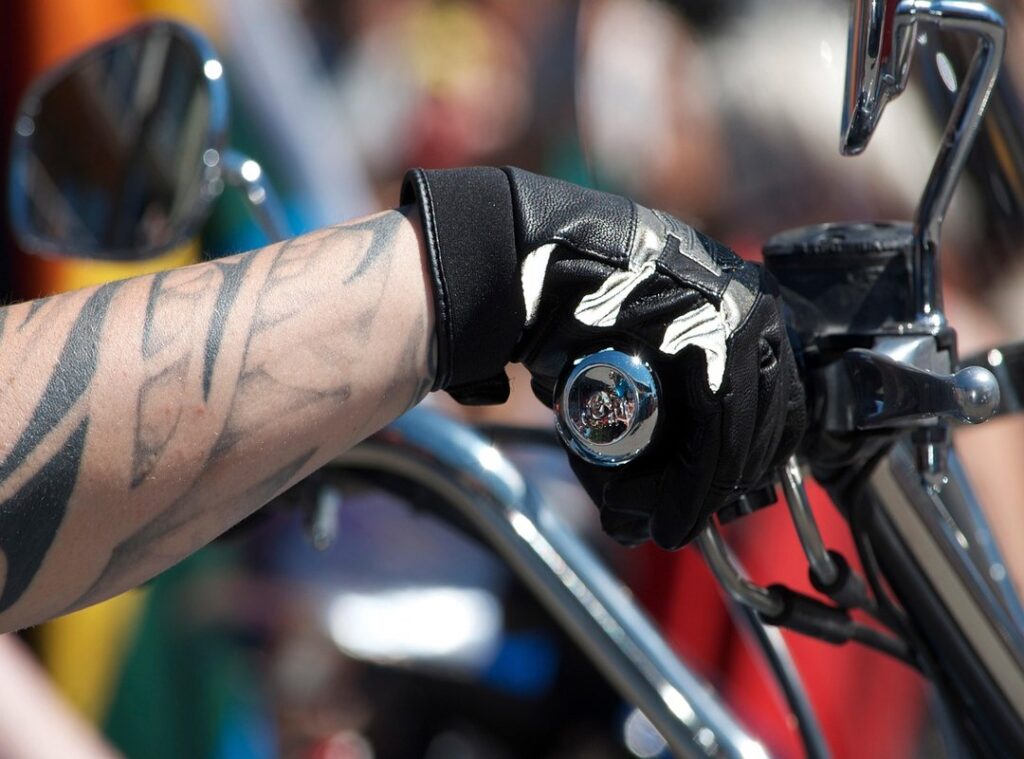
Good riding gloves come with reinforced palms and knuckle protectors. These aren’t just for show. They’re built to handle serious abrasion and protect the small bones in your hands that break way too easily.
But protection is only half the story.
Proper gloves also cut down vibrations from the handlebars. They give you better grip on the controls. When you’re riding in rain or cold, that grip can mean the difference between smooth braking and a panic stop.
Now let’s talk about your feet.
I see riders in sneakers all the time. Some even wear flip flops (I know, it hurts to think about). They figure their feet are tucked away behind the fairings so what’s the risk?
Here’s the problem. Your ankles are fragile. A low speed drop can twist them in ways they’re not meant to bend. I’ve seen guys in running shoes end up with fractures that took months to heal.
Motorcycle boots give you ankle support that regular shoes just can’t match. They have reinforced toe boxes and heel counters that protect your feet if the bike lands on them. The soles are oil resistant and designed not to slip when you put your foot down at a stop.
Most good boots also include shin protection. That’s the part of your leg that’s most likely to get pinned under a bike or dragged across pavement.
Your contact points matter. They’re where you touch the bike and where the bike (or the road) touches you when things go wrong.
Protect them right.
Putting It All Together: The ATGATT Mentality
I learned about ATGATT the hard way.
Not from a crash (thank God). But from watching a buddy slide across asphalt in jeans and a t-shirt. He walked away. Barely. The road rash took months to heal and he still has scars that look like someone took a cheese grater to his leg.
ATGATT stands for All The Gear, All The Time.
It’s not a suggestion. It’s a mindset that says every ride matters, even the quick trip to grab milk.
Some riders say full gear is overkill for short trips. They argue that you can’t live your life wrapped in armor. That real riding is about freedom, not bubble-wrapping yourself.
I get where they’re coming from.
But here’s what they’re missing. Most accidents happen within five miles of home. On those quick, familiar rides where you think nothing can go wrong.
Building your first kit doesn’t mean dropping two grand at once. Start with what protects you most and build from there.
Your helmet comes first. No exceptions. Then gloves, because your hands hit the ground before anything else. After that, get a proper jacket. Boots and pants can wait if money’s tight, but don’t wait long.
(I rode in work boots for my first month. Not proud of it, but I prioritized the gear that mattered most.)
Visibility keeps you alive as much as armor does. Drivers don’t see motorcycles. They see cars and trucks. A bright jacket or reflective strips can be the difference between a driver checking their blind spot and not.
I wear a neon yellow jacket now. Do I look cool? Not really. Do cars give me more space? Absolutely.
Here’s the real cost breakdown. A solid starter kit of fmbmotogear motorcycle gear by formotorbikes runs about $800 to $1,200. Sounds like a lot until you compare it to an ER visit without insurance, which starts around $3,000. Add surgery, physical therapy, and lost work time? You’re looking at tens of thousands.
Why motorbike gear is important fmbmotogear comes down to simple math. Gear costs money once. Medical bills and permanent injuries cost you forever.
I get it. You want to feel the wind and the freedom.
But I’ve seen what happens when riders skip the gear. Even on short trips.
Every piece of equipment you wear has a job. Your helmet protects your brain. Your jacket keeps road rash from shredding your skin. Gloves save your hands when you instinctively reach out during a fall.
The risks don’t care if you’re just going two blocks or two hundred miles.
Why motorbike gear is important fmbmotogear: because asphalt doesn’t forgive and neither does physics. You can’t predict when you’ll need protection. You can only decide whether you’re wearing it when that moment comes.
The ATGATT mindset (All The Gear, All The Time) isn’t about being paranoid. It’s about being smart.
You came here because you know gear matters. Now you understand why each piece is part of your defense system.
Gear Up Every Time
Before you throw your leg over the bike, do a quick check. Is your gear in good shape? Does everything fit right? Are there any tears or worn spots you’ve been ignoring?
Make yourself a promise right now. No exceptions and no shortcuts.
Your next ride starts with the decision to ride protected. Every single time.
 Tracy W. is the founder of FMB Moto Gear, a platform dedicated to delivering informative coverage on motorcycles, rider equipment, and the evolving moto lifestyle. Passionate about road culture and vehicle innovation, Tracy created the platform to help riders stay informed about modern gear, safety practices, maintenance techniques, and industry trends.