I’ve tested more motorcycle gear than most riders will see in a lifetime.
You’re here because you need gear that actually works. Not marketing hype. Not flashy designs that fall apart when you need them most.
Here’s the reality: choosing the right motorcycle gear is confusing. Too many options and most companies won’t tell you what really matters for protection and performance.
This is your complete guide to the fmbmotogear collection. I’ll walk you through helmets, jackets, pants, gloves, and boots so you know exactly what you’re getting.
We’ve put this gear through real-world testing. We understand rider ergonomics and what the safety science actually says (not what marketing teams claim it says).
You’ll learn the specific features that matter in each category. No fluff about premium materials or advanced technology. Just what protects you and what performs when you’re on the road.
By the end, you’ll know how to build a riding kit that matches your needs. Whether you’re commuting daily or hitting the mountains on weekends.
Let’s cut through the noise and get you geared up right.
The FMB Design Philosophy: Engineered for Real-World Riding
I’ll be honest with you.
Most motorcycle gear companies don’t actually ride. They design in boardrooms and test in labs. Then they slap a logo on it and call it performance gear.
That’s not how we do things at fmbmotogear.
Some people think premium materials are just marketing talk. They’ll argue that you’re paying for a brand name, not real protection. That cheaper gear does the same job.
Here’s where I disagree.
When you’re sliding across asphalt at 60 mph, material science isn’t marketing. It’s the difference between walking away and getting carried away.
That’s why we use 1000D Cordura and full-grain leather. Not because they sound impressive on a spec sheet. Because they hold up when everything else fails.
I’ve tested gear that fell apart after one season. Stitching came loose. Armor shifted out of place. Zippers broke on the highway (which is terrifying, by the way).
So we build different.
Our jackets connect to pants with full-length zippers. Not because it looks cool. Because your kidney belt shouldn’t be your last line of defense when your jacket rides up at 80 mph.
We test helmet aerodynamics on actual rides. Urban commutes where you’re constantly turning your head. Highway runs where buffeting can give you a headache after an hour.
Multi-density EPS foams absorb impact better than single-density options. That’s not opinion. That’s physics.
Every piece gets tested in real conditions before it goes to production. Rain. Heat. Cold. Long days in the saddle where comfort matters as much as protection.
Because gear that works in theory but fails in practice isn’t gear worth wearing.
Head Protection: A Deep Dive into the FMB Helmet Lineup
Let me break down something that confuses a lot of riders.
Not all helmets do the same job.
I see people walk into shops thinking any helmet will work for any ride. Then they end up with a full-face on a dirt trail or an adventure helmet on the highway wondering why it feels wrong.
Here’s what you need to know about the different types and when each one actually makes sense.
Full-Face Helmets
These are your workhorses for street riding. The flagship models at fmbmotogear use advanced composites (that’s a fancy way of saying they layer different materials to absorb impact better than single-material shells).
What matters most? ECE 22.06 certification. That’s the newest European safety standard and it’s tougher than what came before.
The ventilation on modern full-face helmets is actually pretty good now. You won’t feel like you’re suffocating at stoplights.
Modular Helmets
Think of these as the convertible version of motorcycle helmets.
The chin bar flips up with one hand. This is perfect when you’re touring and need to talk to someone at a gas station without taking the whole thing off.
Most come with internal sun visors (you flip a switch and boom, instant shade). They’re also set up for communication systems if you ride with a group or need GPS directions.
Adventure & Dual-Sport Helmets
This is where things get interesting.
These helmets blend motocross design with street protection. You get the wide visor and ventilation from dirt riding but with the comfort features you need for longer road trips.
The peak up front? It blocks sun and roost. The extended chin bar gives you room to breathe hard when you’re working through technical sections.
Choosing Your Fit
Measure around your head about an inch above your eyebrows. That’s your starting point.
But here’s what most people don’t realize. Head shapes vary. Some helmets fit round heads better while others work for oval shapes.
A properly fitted helmet should feel snug without pressure points. It shouldn’t move when you shake your head side to side.
Core Defense: FMB Jackets and Riding Pants
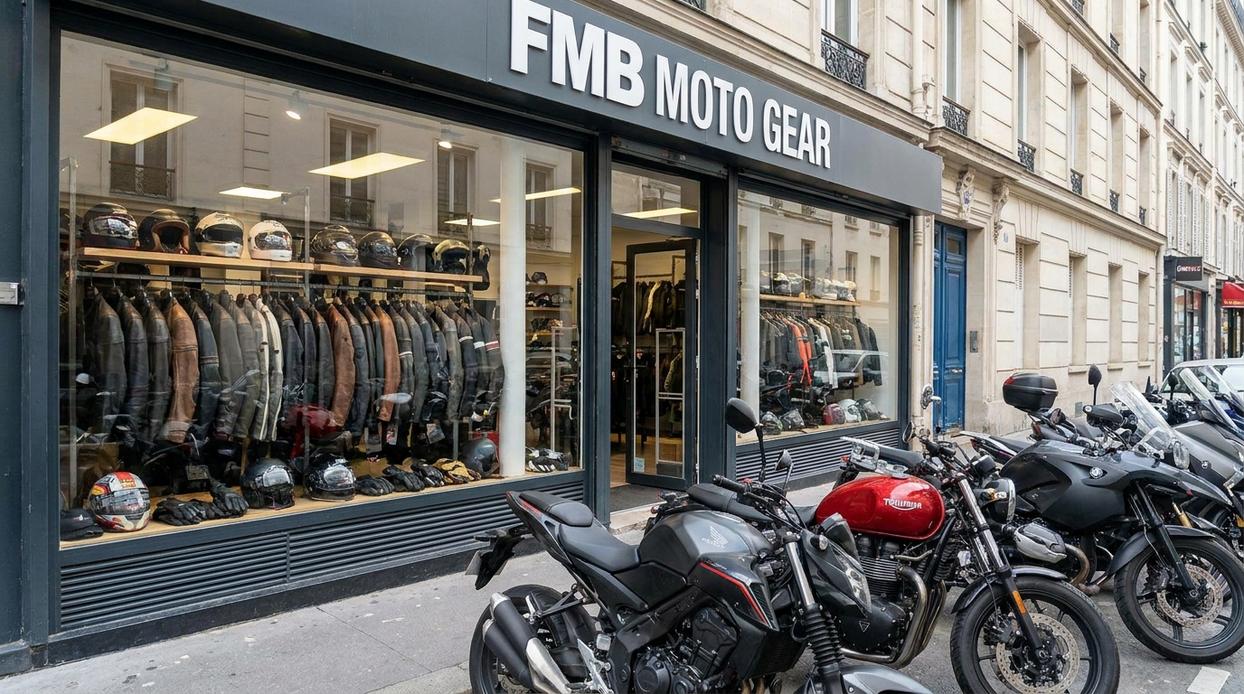
Let’s talk about the gear that actually matters when you go down.
I’m not here to sell you on looking cool (though FMB gear does look pretty good). I’m here to talk about what keeps your skin attached to your body.
Leather Collection
There’s a reason sport and cruiser riders still choose leather.
Nothing beats it for abrasion resistance. When you’re sliding across asphalt at 40 mph, you want cowhide between you and the pavement. Not hope.
FMB’s leather jackets come with perforated panels so you don’t cook in summer heat. The sleeves are pre-curved because your arms aren’t straight when you’re gripping bars. These details matter when you’re spending hours in the saddle.
The pants match the same philosophy. They’re built for riders who understand that style without protection is just expensive clothing.
Textile & All-Weather Gear
Now, some people say leather is the only real option. They’ll tell you textile gear is for weekend warriors who don’t ride seriously.
But here’s what they’re missing.
Modern textile gear has come a long way. We’re talking waterproofing that rivals Gore-Tex, breathability that actually works, and liners you can remove when the weather shifts.
I ride year-round here in Texas. Some days it’s 95 degrees. Other days it’s pouring rain. Swapping entire jacket setups every time the forecast changes? That gets old fast.
FMB’s textile line gives you options. Removable thermal liners for cold mornings. Waterproof layers that actually keep you dry. And the base layer breathes so you’re not swimming in your own sweat by lunch.
Integrated Armor System
Here’s something you need to understand about armor ratings.
CE-Level 2 means the armor absorbed a specific amount of impact energy during testing. It’s not marketing speak. It’s a European safety standard that actually means something.
Every FMB jacket and pant comes standard with CE-Level 2 protection at your shoulders, elbows, back, hips, and knees. These are the spots that hit first when you crash.
(I’ve seen riders skip the back protector because it feels bulky. Don’t be that person.)
The armor sits in pockets designed to keep it positioned right where you need it. Because armor that shifts around during a ride won’t be where you need it during a crash.
Fit and Functionality
This is where most gear fails.
You can have the best materials and top-rated armor, but if your jacket rides up during a slide, you’re getting road rash on your lower back. If your pants sag, your knee armor ends up protecting your shin instead.
FMB builds in adjustment straps at the waist, arms, and legs. Stretch panels at the shoulders and knees give you room to move without compromising the fit. And connection zippers link your jacket to your pants so they stay put.
I know it sounds basic. But I’ve talked to riders who learned this lesson the hard way.
After you’ve sorted your jacket and pants, you’ll probably be wondering which motorbike helmet should i buy fmbmotogear. Your head deserves the same attention as the rest of your body.
The right gear setup works as a system. Not individual pieces you threw together because they were on sale.
Essential Touchpoints: FMB Gloves and Footwear
Your hands and feet take the most abuse on a bike.
They’re also the first things to hit the ground if something goes wrong. Yet I see riders drop thousands on a jacket and helmet, then grab whatever cheap gloves are on sale.
That’s backwards.
Some riders argue that expensive gloves and boots are overkill. They say basic gear works fine for most people. And sure, you can get by with budget options if you’re just putting around town at 25 mph.
But here’s what that thinking misses.
Your hands control everything on a motorcycle. Throttle, brakes, clutch. If your gloves are too bulky or poorly fitted, you lose that fine control. Too thin? You’ll freeze up or end up with road rash.
Let me walk you through what actually matters.
For gloves, you need different options for different conditions. Short-cuff summer gloves give you airflow when it’s hot (think perforated leather or mesh panels). I wear these from May through September here in San Antonio.
Cold weather? You want insulated gauntlets that seal over your jacket sleeves. Waterproof membrane inside. Long cuff to keep wind from sneaking up your arms.
Protection-wise, look for hard knuckle protectors. Not just foam. Actual hard plastic or carbon fiber that’ll slide instead of catching on asphalt. Palm sliders do the same thing for your hands. Scaphoid protection on the thumb side matters too because that bone breaks easily in falls.
For footwear, fmbmotogear breaks it down into three categories.
Protective riding shoes work for urban commuting. They look almost normal but have reinforced ankles and crush-resistant toes. I recommend these if you’re hopping on and off the bike all day.
Short boots give you more ankle support. Better for highway riding or longer trips where you need real protection but don’t want to deal with full touring boots.
Full-height touring boots are what you want for serious distance or bad weather. They come up past your ankle with rigid support that prevents your foot from twisting in a crash. Waterproof. Shin and heel protectors built in.
The key feature I look for? Torsional stiffness. Your boot should not bend sideways easily. That’s what keeps your ankle from snapping if the bike lands on your leg.
Pro tip: Try boots on with the socks you’ll actually wear while riding. Thick socks change the fit completely.
Don’t cheap out on the things between you and the road.
Building Your Ultimate Riding Suit
You came here to understand the FMB motorcycle gear lineup. Now you know what’s available from head to toe.
Choosing the right gear feels overwhelming when you’re staring at dozens of options. But once you understand what each piece does and why it’s designed that way, the decision gets easier.
The FMB collection works as a system. Each piece connects to the next to give you complete protection and comfort while you ride.
Here’s what you should do next: Look at the categories that match your riding style. Start building a kit that gives you the confidence to ride further and safer.
fmbmotogear has spent years developing gear that actually works together. We test everything so you don’t have to guess.
Your next ride deserves better protection. Start with one category and build from there.
 Tracy W. is the founder of FMB Moto Gear, a platform dedicated to delivering informative coverage on motorcycles, rider equipment, and the evolving moto lifestyle. Passionate about road culture and vehicle innovation, Tracy created the platform to help riders stay informed about modern gear, safety practices, maintenance techniques, and industry trends.