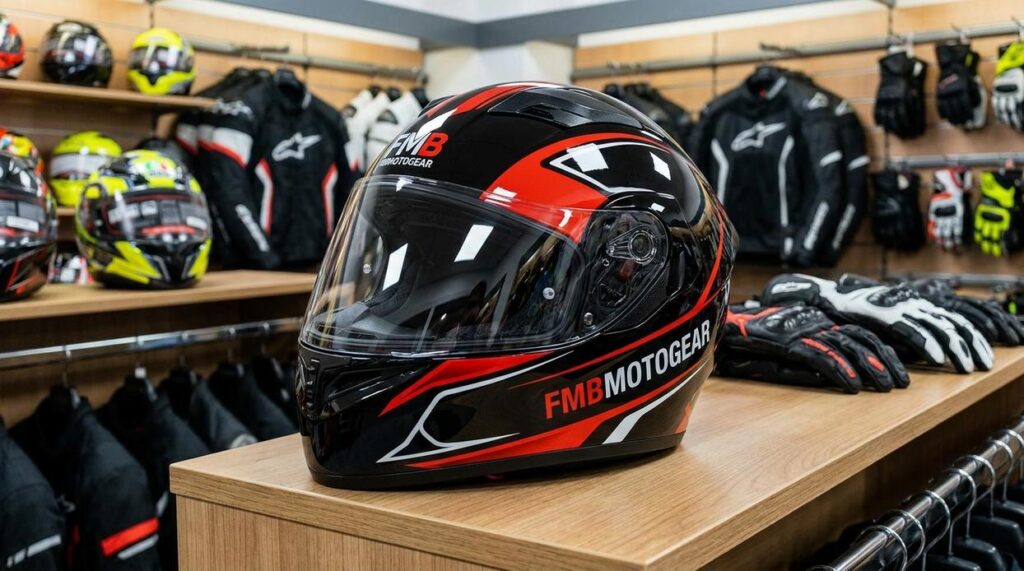
I’ve tested more motorcycle helmets than I care to count, and I still see riders making the same mistakes when they buy their first one.
You’re probably here because you typed which motorbike helmet should i buy fmbmotogear into search, hoping for a straight answer. But here’s the thing: there’s no single right helmet for everyone.
Your head shape is different from mine. The way you ride is different. Your budget is different.
Most helmet guides just throw a list of products at you and call it a day. That doesn’t help you make a smart choice.
I’m going to show you how to actually pick a helmet that fits your head, matches your riding style, and keeps you safe without burning through your wallet.
We test gear in real conditions. Not just in a showroom. I’m talking thousands of hours on the road, in different weather, at different speeds.
You’ll learn what safety ratings actually mean, how to figure out your head shape, and which features matter versus which ones are just marketing fluff.
By the end of this guide, you won’t need me to tell you which helmet to buy. You’ll know how to choose it yourself.
Step 1: Decoding Safety Standards (The Non-Negotiable)
Let’s talk about those stickers on your helmet.
You’ve probably seen the letters. DOT. ECE. SNELL. Maybe you figured they all mean the same thing.
They don’t.
And honestly, understanding the difference could save your life.
Some riders say DOT is good enough. It’s the legal minimum in the U.S., so why worry about the rest? If it passes DOT, you’re covered, right?
Here’s the problem with that thinking.
DOT certification is pass/fail. A helmet either meets the basic standard or it doesn’t. There’s no scale. No measurement of how much better one helmet performs over another (as long as both pass).
Think of it like a high school exam where anything above 60% gets you the same grade.
Now let’s look at ECE 22.06. This is the new global benchmark, and it’s a different beast entirely. The testing goes deeper. We’re talking rotational force testing and multiple impact point assessments. The kind of real-world scenarios that happen when you actually go down.
When you’re searching which motorbike helmet should i buy fmbmotogear, this is the certification I want you to focus on.
Then there’s SNELL. This one’s voluntary. Track riders love it because it focuses on maximum impact absorption. If you’re pushing limits on a circuit, SNELL makes sense.
But here’s what I recommend for most riders.
Start with ECE 22.06 as your baseline. It gives you the most complete protection based on modern testing methods. DOT alone? That’s just checking a legal box.
Your head deserves better than the minimum.
Step 2: The Perfect Fit is the Safest Fit
Here’s something nobody tells you about helmets.
You can drop a thousand bucks on the fanciest lid out there and it’ll still be useless if it doesn’t fit right. A loose helmet will twist around in a crash (basically turning into an expensive paperweight). A tight one? You’ll get pressure points that make you feel like your head’s in a vice after 20 minutes.
Neither option sounds great to me.
So let’s figure out which motorbike helmet should i buy fmbmotogear style. Starting with your actual head.
How to Measure Your Head
Grab a soft measuring tape. The kind your grandma used for sewing works perfectly.
Wrap it around the widest part of your head. That’s about an inch above your eyebrows and straight across the back where your skull sticks out the most.
Write down the measurement in centimeters or inches. Don’t round up because you think you’re between sizes. Use the actual number.
Your Head Has a Shape (Who Knew?)
This part surprised me when I first learned it. Heads aren’t all the same shape when you look from above.
You’ve got three main types:
- Long Oval – Your head is longer front to back than side to side
- Intermediate Oval – Pretty balanced all around (this is most people)
- Round Oval – Wider side to side than front to back
Helmet manufacturers design their internal shapes to match these. A round head in a long oval helmet means pressure on the sides all day. Not fun on a six-hour ride.
The Hot Spot Test
Here’s my favorite trick. Once you’ve got a helmet on, wear it for 15 to 20 minutes. Just sit there. Watch TV. Scroll your phone.
If you feel any specific spots getting uncomfortable, that helmet’s not your friend. A good fit feels snug everywhere but tight nowhere.
Your forehead shouldn’t throb. Your temples shouldn’t ache.
If they do, try a different brand or shape.
Step 3: Match the Helmet to Your Riding Style
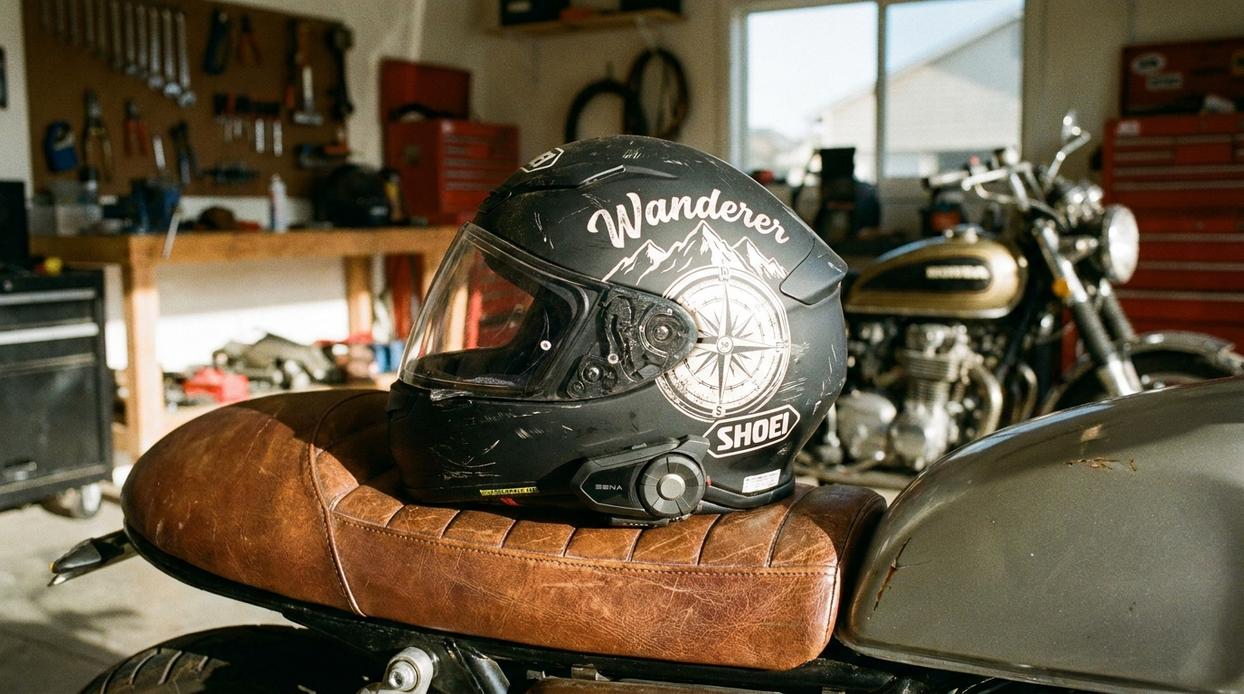
Some riders say helmet type doesn’t matter much. They’ll tell you any decent full-face will work for any kind of riding.
I disagree.
Your riding style changes everything about what you need from a helmet. A track-focused lid that’s perfect at 120 mph can feel like a wind tunnel on a slow cruise through town.
Let me break down what actually works.
The All-Rounder: Full-Face Helmets
This is what I recommend for commuters, sport riders, and anyone hitting track days. You get coverage everywhere that matters.
The Shoei RF-1400 stands out here. The aerodynamics work at highway speeds without the buffeting you get from cheaper options. And the ventilation actually moves air (which matters more than most spec sheets admit).
The Versatile Choice: Modular Helmets
Tourers and commuters love these for good reason. Flip up the chin bar at a stoplight without taking the whole thing off.
But here’s where people get it wrong. They buy the cheapest modular they can find and wonder why it rattles or leaks wind noise at 70 mph.
The Schuberth C5 fixes both problems. The chin bar mechanism clicks solid every time. Wind noise stays low even on long highway runs. Yeah, it costs more. But you’re not fighting fatigue after a four-hour ride.
The Classic Cruiser: Open-Face Helmets
I know what you’re thinking. Open-face helmets are dangerous.
You’re right to be cautious. They don’t protect your face. But scooter and cruiser riders who stick to lower speeds often want that wind-in-the-face feeling.
If you go this route, pair it with proper eye protection. Not negotiable.
The Bell Custom 500 keeps weight down and includes a drop-down sun visor. Small detail that makes a real difference when you’re squinting into afternoon sun.
The Adventurer: ADV/Dual-Sport Helmets
Off-road and on-road riding need different things. ADV helmets try to split that difference.
The Arai XD-4 balances ventilation for trail riding with aerodynamics that won’t beat you up on pavement. The peak blocks sun and roost without creating lift at highway speeds.
Still not sure which motorbike helmet should i buy fmbmotogear style fits you best? Think about where you spend most of your time riding. Your daily commute tells you more than your dream ride.
For a complete breakdown of safety ratings and fit considerations, check out our full motorbike helmet guideline fmbmotogear.
Step 4: Key Features and Materials
You’ve narrowed down your style and fit. Now comes the part where most riders get overwhelmed.
The materials and features.
Some people say you should just buy the cheapest helmet that fits and call it a day. They argue that all certified helmets offer the same protection, so why spend more?
Here’s where I disagree.
Protection standards are just the baseline. The materials and features determine how that helmet performs in real riding conditions.
Let me break down what actually matters.
Shell Materials You’ll See
Polycarbonate is your budget-friendly option. It works. It passes safety tests. But it’s heavier than other materials.
Fiberglass composite steps things up. You get better strength with less weight. Most mid-range helmets use this.
Carbon fiber sits at the top. It’s the lightest and strongest material you can get. But you’ll pay for it.
Features That Make a Difference
An anti-fog system isn’t optional if you ride in cold weather or rain. Look for Pinlock inserts. They actually work (unlike those spray-on solutions that last about five minutes).
Ventilation matters more than you think. I ride in Texas heat, so I need serious airflow. If you’re in a cooler climate, you might want fewer vents.
A removable liner is non-negotiable. Helmets get gross. Being able to wash the liner keeps things bearable.
Worth-It Extras
An internal drop-down sun visor saves you from fumbling with sunglasses. Once you have one, you won’t go back.
Speaker cutouts let you add communication systems without cutting into your liner. If you ride with others or use GPS, this matters.
Emergency-release cheek pads help first responders remove your helmet safely after a crash. It’s one of those things you hope you never need.
The Weight Question
Here’s what nobody tells you about helmet weight. An extra pound doesn’t sound like much until you’ve been riding for three hours.
Premium materials cost more upfront. But they reduce neck fatigue on long rides. If you’re just commuting 20 minutes each way, polycarbonate is fine.
If you’re planning weekend trips or touring, spending more on lighter materials pays off. Your neck will thank you.
When you’re deciding which motorbike helmet should i buy fmbmotogear, think about how you actually ride. Not how you wish you rode.
Match your budget to your riding style. A $600 carbon fiber helmet makes sense for someone doing 500-mile weekends. For quick errands around town? Save your money.
The best dual helmets 2022 fmbmotogear guide shows how different materials perform across various price points if you want to see specific examples.
Your Helmet, Your Confidence
I get it. You’re standing in front of a wall of helmets and they all look the same.
The price tags range from $50 to $500. The features sound impressive but you’re not sure what actually matters. You just want to ride safely without second-guessing your choice.
Here’s the truth: picking which motorbike helmet should i buy fmbmotogear doesn’t have to be complicated.
You need four things. Safety certification (look for ECE). A fit that doesn’t move around or squeeze your head. A style that matches how you ride. Features that make sense for your routes.
That’s it.
I’ve tested enough helmets to know that the right one changes how you feel on the bike. You stop thinking about your gear and start focusing on the road.
You came here confused about helmet options. Now you have a clear framework to make the right call.
Start with our curated collection. We’ve already filtered out the junk. Or reach out to our gear experts with your measurements and riding style. They’ll walk you through options that actually fit your needs.
Your safety matters. Your comfort matters. Get both right and every ride gets better.
 Arynsera Quill is the founder of FMB Moto Gear, a platform dedicated to delivering informative coverage on motorcycles, rider equipment, and the evolving moto lifestyle. Passionate about road culture and vehicle innovation, Arynsera created the platform to help riders stay informed about modern gear, safety practices, maintenance techniques, and industry trends.