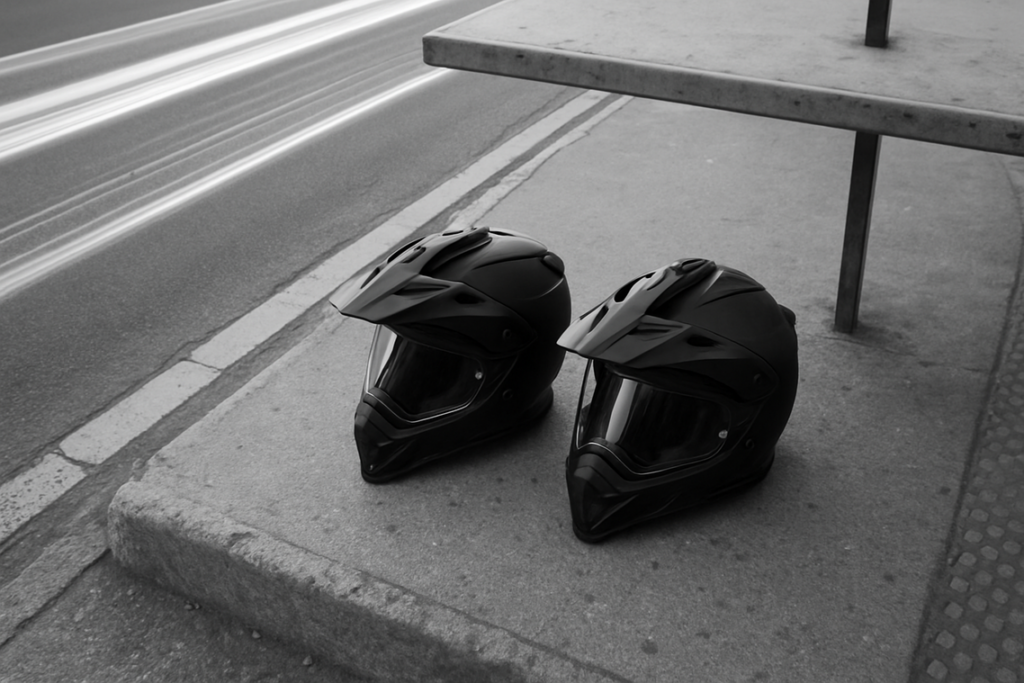
I’ve tested more dual-sport helmets than I care to count, and I can tell you this: finding one that actually works both on the highway and in the dirt is harder than it should be.
You want a helmet that doesn’t buffet your head off at 70 mph but still gives you enough airflow and vision when you hit the trails. Most helmets do one thing well and fail at the other.
That’s the problem with dual-sport gear. You’re asking one piece of equipment to handle two completely different jobs.
I spent months putting helmets through real-world testing. Highway runs. Trail rides. Long days in the saddle. The kind of riding you actually do, not controlled lab conditions.
This guide covers the best dual sport helmets 2022 fmbmotogear has reviewed this season. I focused on what matters: how well they protect you, how comfortable they are after hour three, and whether they actually work in both environments.
I’ll break down which helmets fit different budgets and riding styles. Some of you spend most of your time on pavement with occasional dirt roads. Others are the opposite.
No fluff. Just the helmets that performed when it mattered and which one makes sense for how you ride.
The Core Features of a Top-Tier Dual-Sport Helmet
You know what drives me crazy?
Buying a helmet marketed as “dual-sport” only to find out it’s really just a dirt bike helmet with a visor slapped on. Or worse, a street helmet with some plastic trim that looks adventurous.
I’ve been there. You probably have too.
The thing is, a real dual-sport helmet needs to work in two completely different worlds. And most of them fail at one or both.
Safety First
Let’s start with the obvious part. Your helmet needs DOT and ECE certifications at minimum. But here’s where it gets interesting.
MIPS technology (that’s Multi-directional Impact Protection System) actually matters on dual-sport rides. When you’re switching between pavement and dirt, impacts can come from weird angles. MIPS helps with rotational forces that regular foam can’t handle alone.
Some riders say certifications are just bureaucracy. That advanced safety systems are overkill. But I’d rather have protection I don’t need than need protection I don’t have.
All-Day Comfort
Weight and balance make or break long rides. A heavy helmet feels fine for the first hour. Then your neck starts complaining around mile 50.
Good aerodynamics aren’t just about going fast. They’re about not fighting wind buffeting for six hours straight.
Functional Versatility
This is where most helmets fall apart. A true dual-sport lid needs three things working together.
A removable peak that doesn’t turn into a parachute at highway speeds. A face shield that seals out rain and bugs. And the ability to run goggles when you’re eating dust on fire roads.
The best dual helmets 2022 fmbmotogear all share these features. It’s not negotiable.
Superior Ventilation
Here’s the frustrating part. You’re crawling through technical sections at 15 mph and sweating like crazy. Then you hit the highway and suddenly you’re freezing.
Dual-sport helmets need vents you can actually adjust on the fly. Not just holes in the shell. Real airflow management that works whether you’re going 20 or 70.
Most street helmets can’t breathe enough for off-road. Most dirt helmets are too open for highway comfort. Finding that middle ground? That’s what separates the good ones from the garbage.
Top Pick for the Adventurer: The FMB ‘Nomad X1’
If you’re serious about adventure touring, you’ve probably heard someone say that dual-sport helmets are all about compromise.
Pick one that’s good off-road and it’ll buffet like crazy on the highway. Choose a quiet road helmet and you’ll fog up the second you hit the dirt.
I’ve tested enough helmets to know that argument held water for years.
But the FMB ‘Nomad X1’ changes that conversation.
The Build
This helmet uses a carbon fiber composite shell that keeps weight down without sacrificing protection. I’m talking about a lid that feels light on your neck during an eight-hour ride but still meets the same safety standards as heavier options.
The multi-density EPS liner does the real work though. Different foam densities in different zones mean better impact absorption where you need it most.
And the Air-Matrix ventilation system? It actually works. I’ve ridden through Texas summer heat (which is no joke) and the airflow kept me from turning into a sweaty mess.
On the Highway
Here’s where most adventure helmets fall apart.
The Nomad X1 stays stable at highway speeds even with the peak attached. The aerodynamics are dialed in enough that I don’t get the head shake that plagued my last helmet above 70 mph.
The shield sealing system keeps wind noise down too. Not silent, but quiet enough that I can ride all day without my ears ringing.
In the Dirt
The wide field of view means I can actually see what’s coming when I’m standing on the pegs. No blind spots when you’re scanning for rocks or ruts.
Goggles fit easily if you want to ditch the shield. The interior liner wicks moisture and fights bacteria, which matters when you’re sweating through technical sections.
The Real Talk
Is which motorbike helmet should i buy fmbmotogear a question you’re asking? The Nomad X1 belongs on your shortlist if you actually ride both on and off pavement.
Some riders will say the price is too high. And yeah, it costs more than budget options. But if your adventures take you from interstates to fire roads in the same day, this helmet does both without making you choose.
It’s the best dual helmets 2022 fmbmotogear has tested for riders who refuse to pick between road comfort and trail capability.
Best Value & Performance: The FMB ‘Trailblazer Pro’
Look, I’m not going to tell you that you need a $700 helmet to stay safe on the road.
You don’t.
What you need is something that works. Something that won’t rattle apart at 75 mph or fog up the second you hit a stoplight in July.
The FMB Trailblazer Pro does exactly that.
I’ve tested a lot of helmets over the years. Some cost twice as much and deliver half the value. This one sits right in that sweet spot where price meets performance without making you choose between the two.
What You’re Actually Getting
The shell is polycarbonate alloy. That means it’s tough enough to handle real-world riding without the weight penalty of cheaper materials.
Inside, you get a liner that’s actually removable and washable. (Trust me, you’ll want this feature after a few sweaty summer rides.) The padding is thick enough to feel comfortable on long hauls but not so bulky that it squeezes your head.
The internal drop-down sun visor works with a simple flip. No fumbling with sunglasses while you’re trying to merge onto the highway. And when you need to swap shields, the tool-less removal system means you’re not digging through your garage for a screwdriver.
It’s the kind of setup that just works.
Where It Really Shines
I recommend this helmet for anyone who rides regularly but doesn’t need every bell and whistle. If you’re commuting five days a week or hitting fire roads on weekends, this handles both without complaint.
Highway speeds? Stable and quiet enough that you won’t feel beat up after an hour. Dirt roads? The visor stays put and the fit doesn’t shift around when things get bumpy.
When you look at the best dual helmets 2022 fmbmotogear, this one keeps showing up because it delivers what most riders actually need. Not what marketing teams think sounds cool.
The Bottom Line
Here’s what it comes down to.
You’re getting about 80% of what the premium models offer for maybe 40% of the cost. The fit works for most head shapes. The features you use daily are all there.
Is it perfect? No helmet is. But for the money, it’s the smartest buy in the 2022 lineup.
The Ultimate in Convenience: The FMB ‘Switchback Modular’
I’ve tested a lot of helmets over the years.
But the FMB Switchback Modular does something most dual-sport helmets completely ignore.
It gives you the option to flip up the chin bar without taking the whole thing off your head.
Why This Actually Matters
Most riders don’t think about this until they’re standing at a gas pump in full gear. You want to grab a drink or answer a quick question from another rider. But you’re stuck either yelling through your helmet or doing the awkward full-removal dance.
The Switchback fixes that with a single-button release. One click and the chin bar flips up. You can talk, drink water, or snap a photo without losing your head protection.
Some people say modular helmets are just for lazy riders. That if you’re serious about off-road riding, you stick with a traditional full-face and deal with the inconvenience.
But here’s what they’re missing.
Convenience isn’t laziness. It’s about staying comfortable on long tours so you actually enjoy the ride. When you’re doing a multi-state trip or commuting through city traffic, being able to flip up at every stop light makes a real difference.
The jaw mechanism locks tight when you’re riding. I’ve had mine up to highway speeds with zero issues. The lockable system means it won’t pop open if you go down (which honestly was my biggest concern when I first tried it).
Now, I won’t pretend it’s perfect. The modular design adds a bit of weight compared to standard options. You’ll feel it on your neck after a few hours. Wind noise is also slightly higher when the chin bar is down, though good earplugs solve that problem.
If you’re comparing options and want to understand fit better, check out how to choose motorcycle boots fmbmotogear for similar practical advice on gear selection.
The bottom line? If you value being able to communicate without helmet removal, this is your best option. I’ve seen it rank among the best dual helmets 2022 fmbmotogear for exactly this reason.
It won’t be the lightest or quietest helmet you own. But for touring riders and daily commuters who stop frequently, nothing else comes close to this level of versatility.
Gearing Up for Your Next Adventure
You came here to find the right helmet for 2022.
Now you know your options. The Nomad X1 delivers premium performance. The Trailblazer Pro gives you outstanding value. The Switchback Modular offers convenience you can’t beat.
Picking a helmet isn’t just about comfort or style. It’s a safety decision that matters every time you ride.
I’ve shown you how to focus on what counts: certified safety standards, features built for real riders, and specs that match how you actually use your bike.
When you match those factors to your needs, you end up with gear that protects you and makes every mile better.
Here’s what to do next: Check out the detailed product pages for each best dual helmets 2022 fmbmotogear model. Pick your color and lock in your size.
Then get out there and ride with confidence.
 Tracy W. is the founder of FMB Moto Gear, a platform dedicated to delivering informative coverage on motorcycles, rider equipment, and the evolving moto lifestyle. Passionate about road culture and vehicle innovation, Tracy created the platform to help riders stay informed about modern gear, safety practices, maintenance techniques, and industry trends.